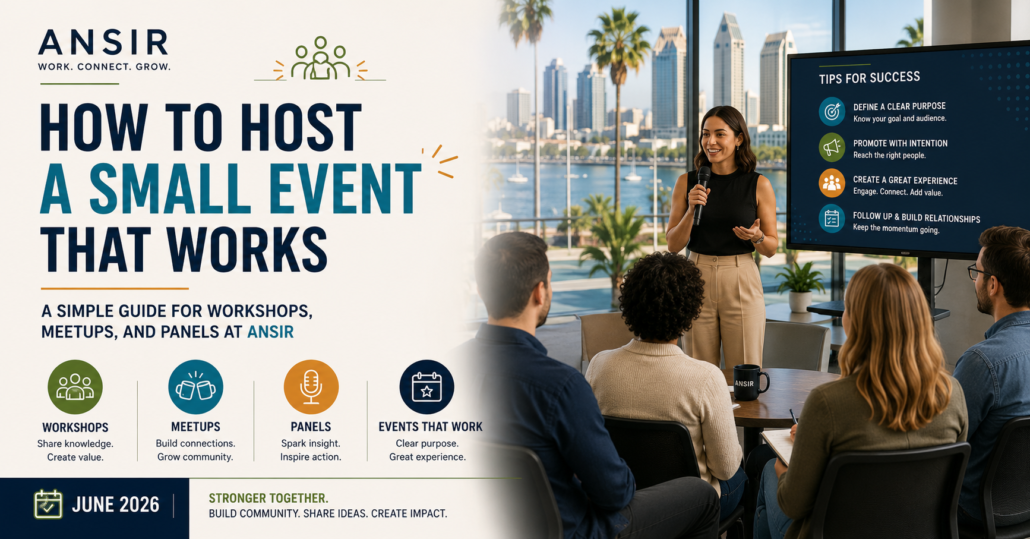
Small events can be one of the highest-leverage ways to build community and create opportunities—without needing a huge budget or a massive audience.
The key is to keep it simple: a clear topic, a tight format, a friendly vibe, and an easy next step for attendees.
This guide covers a practical approach to hosting workshops, meetups, and panels at Ansir (or anywhere), with a process you can repeat.
What makes a small event “work”
A successful small event usually delivers at least one of these outcomes:
- Learning: people leave with a new skill or clarity
- Connection: people meet someone useful or interesting
- Momentum: people take a next step afterward
Step 1 — Pick a topic people will actually say yes to
Great topics are specific and practical. The best event topics solve a real problem for a clear group.
Topic formula
“How to get [result] without [pain]”
Examples
- “How to get your first 10 B2B leads without cold calling”
- “A simple bookkeeping setup for freelancers”
- “Landing page teardown night: bring your page, get feedback”
Step 2 — Choose a format that fits your energy
Workshop (best for learning)
- 30–45 minutes teaching
- 15–30 minutes Q&A or guided exercise
Meetup (best for connection)
- Short intro + a simple prompt
- Structured mingling (pairs or small groups)
Panel (best for credibility + insight)
- 2–4 panelists
- Prepared questions + audience Q&A
Tip: Small events do best when they’re timeboxed and structured. People relax when they know what to expect.
Step 3 — Use a simple run-of-show
Copy/paste this for a 60-minute event:
0:00–0:05 — Welcome
- What this event is
- Who it’s for
- What people will leave with
0:05–0:10 — Quick intros
Use one prompt to keep it easy:
“Name, what you do, and what you’re hoping to get from today.”
0:10–0:45 — Main content
- Workshop: teach + quick exercise
- Meetup: guided conversation prompts
- Panel: prepared questions
0:45–0:58 — Q&A / discussion
Keep it moving by repeating the question and summarizing the answer.
0:58–1:00 — Close + next step
End with one clear next step (resource, follow-up, or future event).
Step 4 — Promote it without spamming
Small events don’t need huge marketing. They need the right people.
A simple promotion plan
- 1 week before: post once + invite 10 people directly
- 3 days before: reminder post + ask partners to share
- Day of: short reminder
Direct invite script (works well)
“Hey [Name]—I’m hosting a small [workshop/meetup] on [topic] at Ansir. It’s aimed at [who] and will be practical + low-key. Want the details?”
Step 5 — Design the room for comfort
People feel awkward when the environment is awkward. Small tweaks help:
- Arrange seats so people can see each other
- Use a clear start time and end time
- Have water available if possible
- Use a simple sign or slide so people know they’re in the right place
Step 6 — The follow-up that creates momentum
Follow-up is where events turn into relationships.
Simple follow-up message
“Thanks for coming today—great meeting you. If you’d like, here’s the resource we mentioned: [link]. Also, what are you working on next?”
Optional: one “next step” offer
- Invite people to the next event
- Offer a short 15-minute coffee chat
- Share a one-page worksheet or template
Make it repeatable
The best events aren’t one-offs. They become a rhythm: one small event per month builds community faster than a big event once a year.
Want to host something at Ansir?
If you have a topic you’d like to run as a workshop, meetup, or panel, keep it simple and practical. A small, well-run event is one of the best ways to create value and meet the right people.