
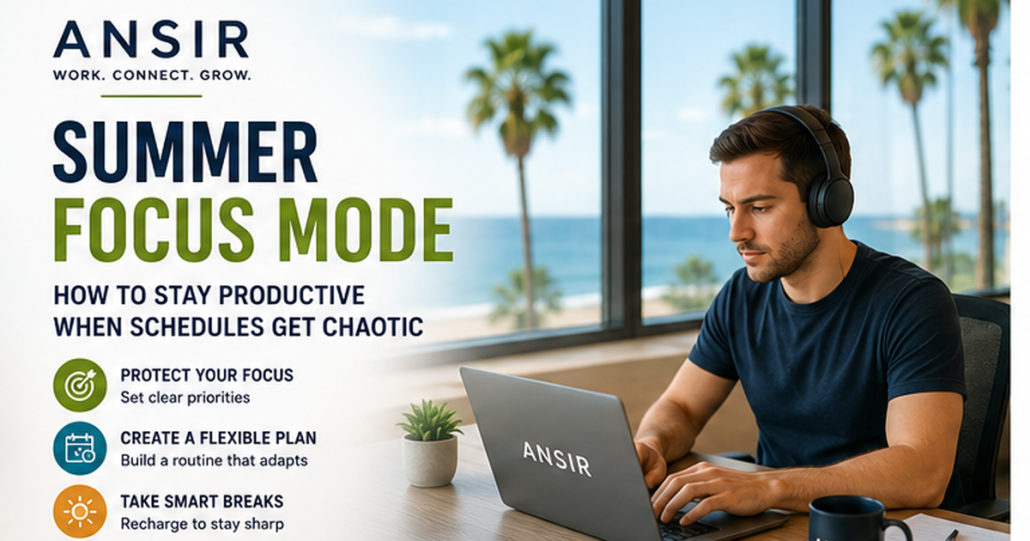
Summer is a strange season for work. The days are longer, the weather is better, and everyone’s schedule seems to shift at once. Vacations, family plans, kids at home, travel, events, and general summer energy can make focus feel harder than usual.
The answer is not to pretend summer is a normal work season. The better approach is to create a flexible “summer focus mode” that protects your most important work without requiring a perfect routine.
The goal: protect momentum, not perfection
During chaotic seasons, the win is simple: keep the important things moving. You may not have your ideal schedule every week, but you can still protect your priorities, reduce distractions, and make consistent progress.
Think of summer focus as a lighter operating system:
- Fewer priorities
- Shorter work blocks
- More intentional breaks
- Clearer boundaries
- Weekly resets instead of rigid daily plans
1. Pick your “minimum viable week”
Start by defining the smallest amount of focused work that would still make the week feel successful.
Ask yourself:
- What absolutely needs to move forward this week?
- What can wait?
- What would make Friday feel like a win?
Your minimum viable week might be:
- Two 90-minute deep work blocks
- One client deliverable completed
- One sales follow-up session
- One planning block and one execution block
This helps you stop overplanning and focus on the work that actually matters.
2. Use shorter focus blocks
Summer schedules often do not support long, uninterrupted workdays. Instead of waiting for a perfect three-hour window, use shorter blocks that are easier to protect.
Try this structure
- 25 minutes: quick admin, email, small tasks
- 50 minutes: writing, planning, research, light strategy
- 90 minutes: deep work, client deliverables, creative work
The key is to decide what the block is for before you start. A focused 50-minute block beats a scattered afternoon.
3. Create a weekly summer reset
When daily routines are inconsistent, weekly resets become more important.
Set aside 20 minutes at the start of each week to answer:
- What are my top 3 priorities this week?
- What schedule disruptions do I already know about?
- Where can I realistically place my focus blocks?
- What should I intentionally not worry about this week?
This keeps you from being surprised by your own calendar.
4. Protect your best energy
Not all hours are equal. If your mornings are sharp, do not spend them on inbox cleanup. If afternoons are slower, do not schedule your hardest thinking work there.
Match work to energy:
- High energy: strategy, writing, problem-solving, important client work
- Medium energy: meetings, project updates, planning
- Low energy: email, admin, organizing files, simple follow-ups
5. Make breaks intentional
Summer distractions are not always bad. Sometimes you need the beach walk, the lunch outside, the afternoon reset, or the early shutdown.
The problem is when breaks happen accidentally and turn into drift.
Try planning breaks as part of the workday:
- Take a real lunch away from the screen
- Use a 10-minute walk between focus blocks
- Schedule an early stop time when possible
- Avoid “fake breaks” that are just scrolling
6. Use coworking as a focus anchor
If your home schedule gets unpredictable in summer, coworking can become the place where focus happens.
A simple summer coworking routine could be:
- Pick 1–2 recurring coworking days per week
- Arrive with one priority already chosen
- Do one 90-minute focus block before checking messages
- Use the environment to reset your work rhythm
Sometimes the easiest way to focus is to change the place where you are trying to focus.
7. End each week with one clear next step
Before the weekend, write down the next action for your most important project. Not the full plan. Just the next step.
For example:
- Draft the intro section
- Send the proposal follow-up
- Review the numbers
- Outline the next workshop
This makes it easier to restart when Monday comes around.
Final takeaway
Summer productivity is not about forcing a perfect routine into an imperfect season. It is about protecting the work that matters, simplifying your plan, and using the right environment to stay in motion.
Keep it lighter. Keep it clear. Keep moving.


